
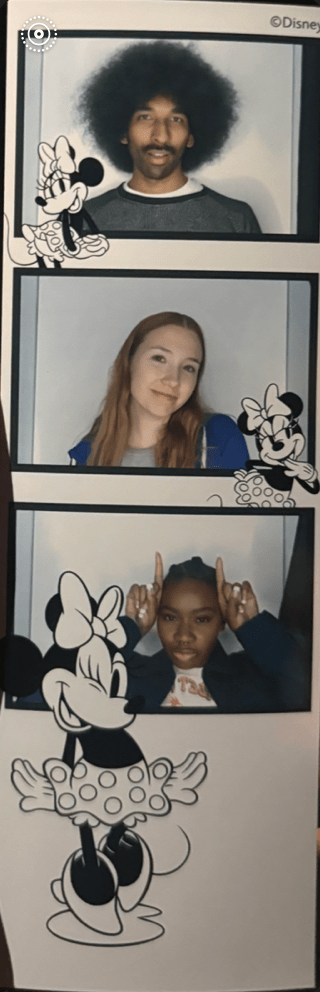
I hadn’t been to Disneyland since I was about five years old, which basically means this trip felt like going for the first time. I didn’t remember anything except that I liked Cars Land as a kid. That’s it. Everything else was completely unfamiliar to me.
This trip was actually a birthday gift from my friend Braden, which already made it special before we even got there. The funny part is that I was probably more excited than most of the kids in the park. For the past year I’ve been talking about Disneyland like it’s some faraway, unattainable dream. At least twice a month I would bring it up. So when the day finally came, I was genuinely thrilled.
Honestly, I had to resist the urge to skip everywhere. I was so happy that I kept feeling like I should just spin in a dramatic circle in the middle of the park like I was in a movie. I didn’t do it because I think I would’ve gotten some very strange looks, but the urge was definitely there all day.
The day didn’t start out perfectly though. Within minutes of getting to the parking lot I accidentally hit someone’s car with my door. I was too scared to get out and apologize, so I just sat there hoping the universe would forgive me. Luckily that ended up being the only flaw in the entire day.
At one point Chris started a whole conversation about what roles we would have if we had a podcast together. According to him, Braden would obviously be the voice of reason. That part makes sense. But he also suggested that I would be the one just saying crazy things all the time, which I’m not sure I agree with. I feel like I’m being slightly misrepresented.
For lunch I got a kids meal and it was honestly fire. I forgot how much I prefer kids meals to regular meals. Something about the fact that they’re cheaper just makes them taste better. Also the portion size is perfect.
I also discovered something important about myself: I don’t think I’m afraid of heights until I’m actually on something high. The Ferris wheel proved that. While we were up there I was suddenly very aware of how far off the ground we were and I was low-key anxious the entire time.
Another mission of the day was trying to find Scarlett Witch ears. The problem is that the only Disney shirt I own is a Scarlett Witch shirt, so I thought it would make sense to find matching ears. Apparently that was a delusional plan because when I asked an employee in a gift shop, they literally laughed at me and said that basically everyone hates her. I’m still processing that.
One thing that really surprised me was how much I loved the Star Wars ride. I don’t actually know anything about Star Wars lore, but the ride and the whole themed area were amazing. It honestly made me consider finally watching the movies at some point, because clearly I’m missing out.
Splash Mountain also deserves a mention because Braden specifically asked for the “less wet” seat and still ended up pretty soaked. So I’m starting to think the “less wet” option might just be emotional support.
At the end of the night when the park closed, instead of calmly walking out like normal adults, me, Chris, and Braden raced each other out of the park. For some reason I felt no shame, and didn’t even think about the fact I was probably being judged by a lot of parents.
Overall it was honestly one of the happiest days I’ve had in a while. After talking about going to Disneyland for a whole year like it was some impossible dream, it was pretty surreal to actually be there with my friends.
And now that I’ve been once… I’m probably about to start talking about going back again.
I hadn’t been to Disneyland since I was about five years old, which basically means this trip felt like going for the first time. I didn’t remember anything except that I liked Cars Land as a kid. That’s it. Everything else was completely unfamiliar to me.
This trip was actually a birthday gift from my friend Braden, which already made it special before we even got there. The funny part is that I was probably more excited than most of the kids in the park. For the past year I’ve been talking about Disneyland like it’s some faraway, unattainable dream. At least twice a month I would bring it up. So when the day finally came, I was genuinely thrilled.
Honestly, I had to resist the urge to skip everywhere. I was so happy that I kept feeling like I should just spin in a dramatic circle in the middle of the park like I was in a movie. I didn’t do it because I think I would’ve gotten some very strange looks, but the urge was definitely there all day.
The day didn’t start out perfectly though. Within minutes of getting to the parking lot I accidentally hit someone’s car with my door. I was too scared to get out and apologize, so I just sat there hoping the universe would forgive me. Luckily that ended up being the only flaw in the entire day.
At one point Chris started a whole conversation about what roles we would have if we had a podcast together. According to him, Braden would obviously be the voice of reason. That part makes sense. But he also suggested that I would be the one just saying crazy things all the time, which I’m not sure I agree with. I feel like I’m being slightly misrepresented.
For lunch I got a kids meal and it was honestly fire. I forgot how much I prefer kids meals to regular meals. Something about the fact that they’re cheaper just makes them taste better. Also the portion size is perfect.
I also discovered something important about myself: I don’t think I’m afraid of heights until I’m actually on something high. The Ferris wheel proved that. While we were up there I was suddenly very aware of how far off the ground we were and I was low-key anxious the entire time.
Another mission of the day was trying to find Scarlett Witch ears. The problem is that the only Disney shirt I own is a Scarlett Witch shirt, so I thought it would make sense to find matching ears. Apparently that was a delusional plan because when I asked an employee in a gift shop, they literally laughed at me and said that basically everyone hates her. I’m still processing that.
One thing that really surprised me was how much I loved the Star Wars ride. I don’t actually know anything about Star Wars lore, but the ride and the whole themed area were amazing. It honestly made me consider finally watching the movies at some point, because clearly I’m missing out.
Splash Mountain also deserves a mention because Braden specifically asked for the “less wet” seat and still ended up pretty soaked. So I’m starting to think the “less wet” option might just be emotional support.
At the end of the night when the park closed, instead of calmly walking out like normal adults, me, Chris, and Braden raced each other out of the park. For some reason I felt no shame, and didn’t even think about the fact I was probably being judged by a lot of parents.
Overall it was honestly one of the happiest days I’ve had in a while. After talking about going to Disneyland for a whole year like it was some impossible dream, it was pretty surreal to actually be there with my friends.
And now that I’ve been once… I’m probably about to start talking about going back again.
What is Romance?
The other day I found myself wondering what romance actually is.
Not love.
Not attraction.
Romance.
It’s one of those words we use constantly but rarely define. We talk about romantic relationships, romantic chemistry, romantic gestures, and romantic feelings, but if someone asked me to explain what makes something romantic, I’m not sure I could have answered.
At first, I thought romance might just be emotional connection.
But that didn’t make sense.
I have emotional connections with my friends. Some of my friendships involve deep conversations, vulnerability, trust, and a level of understanding that took years to build. Those relationships are meaningful, but nobody would describe them as romantic.
Then I thought maybe romance was where emotional connection meets sexual attraction.
That didn’t feel right either.
People can be physically attracted to each other without experiencing anything I would call romance. Attraction can exist all by itself.
So if romance isn’t emotional connection and it isn’t sexual attraction, what exactly is it?
I think I accidentally found my answer while thinking about stargazing.
For some reason, stargazing is considered one of the most romantic things two people can do together. It’s in movies, books, television shows, and every list of date ideas ever created.
But I’ve stargazed with friends before.
Nobody thought it was romantic.
We were looking at the same stars. Sitting in the same silence. Having the same kind of deep conversations people associate with romantic moments.
So what changed?
I think the answer is anticipation.
When you’re stargazing with a friend, you’re enjoying the moment for what it is.
When you’re stargazing with someone you have feelings for, you’re wondering.
Will they move closer?
Will they grab my hand?
Will they kiss me?
Do they feel the same way I do?
The stars haven’t changed.
The anticipation has.
The more I thought about it, the more examples I found.
A good morning text from a friend is sweet.
A good morning text from someone you’re interested in can have you staring at your phone smiling like an idiot.
Walking someone to their car isn’t inherently romantic.
Neither is sharing a meal.
Neither is sitting next to someone on a couch.
Yet somehow all of those things can feel romantic under the right circumstances.
Not because of the action itself.
Because of the possibility attached to it.
I think part of the confusion comes from the fact that we tend to lump emotional connection, sexual connection, and romance into the same category when they’re actually different experiences.
Emotional connection is about feeling understood.
Sexual connection is about desire.
Romance is about possibility.
Sometimes all three happen at once.
Sometimes only one exists.
I can have emotional intimacy with a friend and feel absolutely no romance.
I can experience sexual attraction without feeling emotionally connected.
And I think I can even experience romance before either of those things fully develop.
In fact, I think that’s what a crush often is.
You’re not deeply connected yet.
You may not even know if the attraction is real.
What you’re experiencing is fascination with the possibility of what could happen.
And that’s where I started thinking about the difference between romance and love.
I don’t think they’re the same thing.
I think love is rooted in reality.
Romance is rooted in possibility.
Love is about knowing.
Romance is about wondering.
You can’t deeply love someone you barely know. Love requires familiarity. It requires seeing a person clearly and choosing them anyway.
Romance doesn’t require that.
Romance thrives in the space where you’re still discovering someone.
The first date.
The first kiss.
The first time you stay up until two in the morning talking.
The first time you wonder if they’re thinking about you too.
All of those moments are powered by one question:
What if?
What if they like me?
What if this becomes something?
What if this person changes my life?
That’s romance.
And I think that’s why a dynamic can feel romantic without being love.
Just because you’re experiencing romance doesn’t mean you’re in love.
It might simply mean you’re fascinated by the possibility of what could happen.
That’s why crushes feel romantic.
That’s why flirting feels romantic.
That’s why almost-relationships feel romantic.
Sometimes people aren’t in love with a person.
They’re in love with the question mark.
They’re captivated by the potential.
They’re fascinated by the story they haven’t gotten to the end of yet.
What’s interesting is that I think the opposite can happen too.
You can have emotional connection and sexual connection without romance.
Long-term relationships sometimes experience this.
The emotional intimacy is there.
The attraction is there.
But the anticipation is gone.
Nobody is wondering anymore.
Nobody is discovering anything new.
Nobody is asking “what if?”
The relationship has moved from possibility to certainty.
Maybe that’s why people say they want to “bring the romance back.”
They’re usually not asking for more love.
And they’re not necessarily asking for more attraction.
They’re asking for more anticipation.
More mystery.
More curiosity.
More moments that remind them what it felt like to wonder.
For a long time, I thought romance was flowers, candlelit dinners, and grand gestures.
Now I think those things are just expressions of romance.
The romance itself is something else.
It’s the tension between what is happening and what might happen.
It’s possibility.
It’s anticipation.
Which would explain why stargazing can feel completely platonic one night and deeply romantic the next.
The stars never changed.
The meaning did.
The Middle Class Socialite
Lately I’ve become fascinated by socialites.
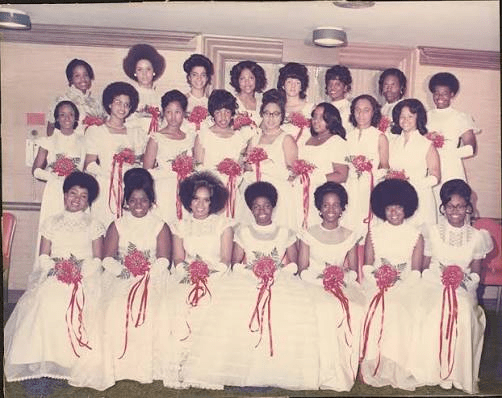
Not the old money, country club, “summering in the Hamptons” kind of socialite.
The modern kind.
The woman who always seems to know where the new restaurant is.
The woman who somehow gets invited to everything.
The woman who knows people.
The woman who is well connected, well traveled, and generally appears to have an interesting life.
The problem is that when I was younger, I assumed socialites were rich.
Now that I’m twenty five, I’m realizing that can’t possibly be the whole story.
Because some of the most socially successful women I know are not trust fund babies.
They aren’t flying private.
They don’t have family vacation homes in Europe.
And yet they seem to possess something that looks a lot like prestige.
Which brings me to my current question:
How does a middle class woman become a socialite?
As someone who graduated from an SEC school, I sometimes feel like I was accidentally given two completely different sets of instructions for adulthood.
The first set of instructions was fairly traditional.
Get a good job.
Find a husband.
Get married.
Buy a house.
Have children.
The famous “Ring by Spring” culture exists for a reason.
Whether people admit it or not, there is still a certain amount of social status attached to getting engaged young and following the expected timeline.
The second set of instructions came from social media.
Travel.
Build a personal brand.
Collect experiences.
Look interesting.
Look successful.
Have a beautifully curated life full of rooftop bars, passport stamps, and aesthetically pleasing dinners.
Somehow I graduated and found myself caught between the two.
I wasn’t engaged.
I wasn’t buying a house.
I wasn’t vacationing in Europe every summer.
But I also wasn’t particularly interested in spending every weekend sitting at home.
I wanted a socially interesting life.
And that’s when I started noticing the Middle Class Socialite.
The Middle Class Socialite wants many of the same things wealthy socialites want.
She wants great friendships.
She wants access.
She wants to be invited places.
She wants stories.
She wants experiences.
She wants people to think she’s doing well.
The difference is that she has to engineer all of it.
She doesn’t have a trust fund.
She has Google Flights alerts.
She doesn’t have a country club membership.
She has a group chat.
She doesn’t have a summer house.
She has friends willing to split a hotel room.
One thing I’ve noticed online is the assumption that anybody under thirty who travels frequently or owns nice things must either have rich parents or be drowning in credit card debt.
And while both of those things certainly happen, I think it’s become an oddly immature way of looking at adulthood.
The internet often acts as though lifestyle is a mystery.
Someone goes on vacation?
Debt.
Someone buys a designer bag?
Trust fund.
Someone attends three weddings in different states?
Financial irresponsibility.
But adulthood is mostly tradeoffs.
The woman taking international trips might have roommates.
The woman living in a luxury apartment might never travel.
The woman carrying the designer handbag might drive a car that is older than she is.
The older I get, the more I realize that people prioritize different things.
And honestly, I think assuming every person with something we want is either richer or more reckless than us prevents us from learning anything useful.
What interests me most about the Middle Class Socialite isn’t her budget.
It’s her strategy.
Because if you can’t buy prestige, how do you acquire it?
Do you get married?
Do you build an impressive career?
Do you become the woman who knows everyone?
Do you travel?
Do you host dinner parties?
Do you join organizations?
Do you become interesting?
I genuinely don’t know.
But I do know that some people seem to accumulate social capital the same way other people accumulate financial capital.
They collect relationships.
Experiences.
Stories.
Skills.
Connections.
Over time, those things start to compound.
People trust them.
Invite them places.
Recommend them for opportunities.
Introduce them to other people.
And suddenly they have something that looks a lot like status.
Not because they inherited it.
Because they built it.
Maybe that’s what fascinates me about this phase of life.
For the first time, I realize there isn’t one ladder.
There are dozens.
Marriage is a ladder.
Career success is a ladder.
Money is a ladder.
Influence is a ladder.
Community is a ladder.
Travel is a ladder.
The challenge isn’t figuring out how to climb.
The challenge is deciding which ladder is actually leaning against the wall you want.
As for me, I still haven’t figured it out.
I know I want meaningful friendships.
I know I want to keep traveling.
I know I want to meet interesting people.
I know I want to be successful.
And if I’m being completely honest, I probably want a little prestige too.
Not because I need strangers to be impressed by me.
But because I think most ambitious people want to feel like they’re building something.
Maybe the Middle Class Socialite isn’t trying to become rich at all.
Maybe she’s trying to become the kind of person people are glad they know.
And maybe that’s a better goal anyway.
Learning to Trust the People Who Love Me
If you asked the people in my life to describe me, I think most of them would say I’m outgoing. Confident. Friendly. The kind of person who can strike up a conversation with almost anyone. I genuinely love people. I love making new friends, hosting dinners, planning trips, and checking in on the people I care about. Being around others gives me energy.
What most people don’t know is that I’m also constantly wondering if they’re mad at me.
It’s almost funny when I say it out loud because it sounds so irrational. Someone takes a little longer than usual to respond to a text, and my brain immediately starts writing a story. Maybe I said something wrong. Maybe they realized they don’t actually like me. Maybe I was too much. Too loud. Too opinionated. Too needy.
The strange part is that I usually know these thoughts don’t make sense. They often have no evidence behind them. But anxiety doesn’t need evidence to feel convincing.
I first realized this about myself during therapy in college. My therapist helped me recognize how much fear I carried around making people upset with me. Back then, I saw conflict as something relationships couldn’t survive. If I told someone how I really felt or admitted I was hurt, I assumed it would become an argument. And if there was an argument, I assumed the relationship would end.
So instead of risking conflict, I often stayed quiet.
Ironically, avoiding difficult conversations sometimes created the very distance I was trying to prevent.
After graduating, I noticed something new. College friendships naturally changed. We no longer saw each other every day, grabbed dinner between classes, or bumped into each other walking across campus. Everyone started building careers, moving cities, and creating new routines.
Instead of seeing that as a normal transition into adulthood, my brain interpreted the silence differently.
I started believing that if we weren’t talking regularly, they probably weren’t thinking about me anymore.
I had a hard time imagining that someone could miss me, care about me, or still feel connected to me without constant communication. Somewhere along the way, I had confused silence with indifference.
Looking back, that’s such a sad way to experience friendship.
The truth is, I don’t tell many people I feel this way. I don’t constantly ask, “Are you mad at me?” I actually keep most of these thoughts to myself. Instead, I overcompensate. I become even bubblier. Even more affectionate. I make sure everyone knows how much I love them while quietly wondering if they feel the same about me.
People usually describe me as confident, which always makes me smile. Confidence and anxiety aren’t opposites. Sometimes they simply exist in different rooms. The version of me that strangers meet looks incredibly self assured. The version my mind creates when someone doesn’t text back has a much harder time believing she’s loved.
One of the hardest lessons I’ve learned came through a friendship that eventually ended. For a long time, she thought I was upset with her. In reality, I was emotionally exhausted and struggling to show up as my usual lively self. Neither of us had the conversation we needed to have. We each filled in the silence with our own fears.
I still miss that friendship.
Sometimes I wonder if anxiety doesn’t just tell us stories about ourselves. Maybe it tells stories about the people we love, too.
Recently, someone gave me advice that I’ve been thinking about almost every day.
They said, “If you trust your friends, trust that they love you. Trust that they’re honest. Trust that they value your relationship enough to tell you if something is wrong.”
That stopped me in my tracks.
Because I do trust my friends.
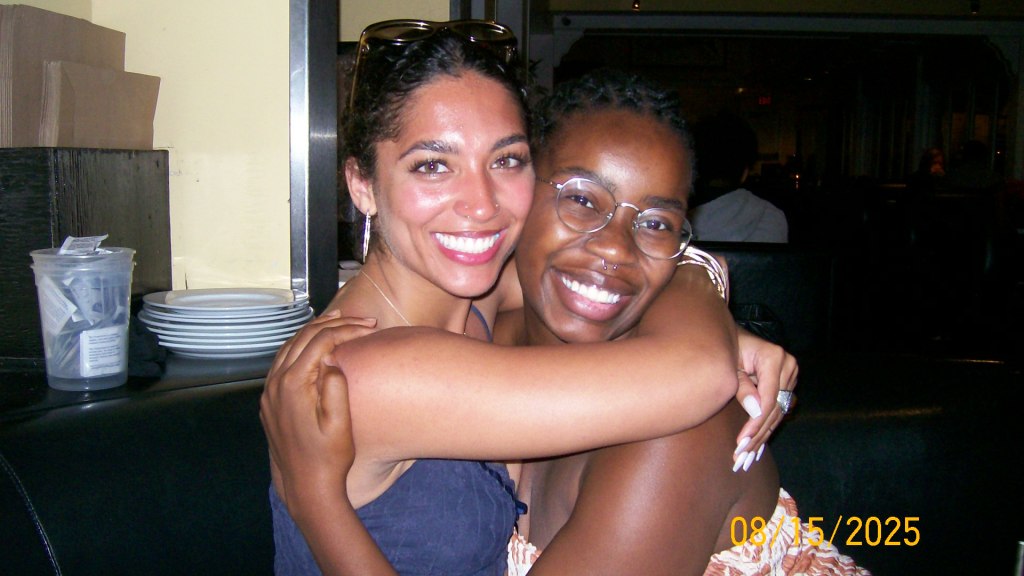
My friends are one of the greatest blessings of my life. They have celebrated my wins, comforted me through losses, answered late-night phone calls, and loved me through different versions of myself. If I truly believe they are honest people, then why do I assume they are secretly hiding resentment from me?
Why do I believe my anxiety more than I believe their character?
That realization has changed the way I think about trust.
Trust isn’t just believing someone won’t betray you. It’s believing them when they show you they care. It’s believing years of consistency instead of one delayed response. It’s trusting that the people who have repeatedly chosen you will continue choosing you unless they tell you otherwise.
These days, when my anxiety starts telling me a story, I try to answer it with facts instead of fear.
This friend has always communicated honestly with me.
This person invited me into their life.
They have checked on me before.
They have never given me a reason to believe they’re secretly angry.
Their actions deserve more weight than my assumptions.
Does that make the anxiety disappear?
Not always.
Sometimes I still wonder.
Sometimes I still replay conversations in my head.
Sometimes I still need to remind myself that silence isn’t rejection.
But now, instead of asking whether everyone is secretly upset with me, I ask a different question.
“What evidence do I have that I’m loved?”
Almost every time, the answer comes quickly.
More than I realized.
I’m learning that love doesn’t always sound like constant communication. Sometimes it looks like picking up right where you left off. Sometimes it looks like a friend sending you a meme after two weeks of silence as if no time has passed. Sometimes it looks like people quietly carrying you in their hearts while they’re busy living their own lives.
And maybe growing up means believing that.
Maybe it means choosing to trust that the people I love… love me just as deeply.
Why Love Island Matters More Than We Think

Every summer, millions of people tune into Love Island for the romance, the recouplings, and the inevitable chaos. But somewhere between Casa Amor and Movie Night, something interesting happens. The internet stops talking about a television show and starts debating communication, boundaries, self-respect, forgiveness, emotional intelligence, and what healthy love should actually look like.
I don’t think Love Island is important because it’s teaching us how to date. I think it’s important because it exposes the relationship values our generation holds, and the ones we’re still trying to figure out.
One thing this season made me think about is how quickly viewers decide that a couple’s connection isn’t real. Every day I see comments insisting that the strongest couples have “no chemistry,” that someone is “faking it,” or that they’re only staying together to win. What’s fascinating is that these opinions often exist alongside repeated statements from the contestants themselves and even from other islanders who spend every hour together saying the exact opposite. Somewhere along the way, we’ve become incredibly confident that our interpretation of a heavily edited television show outweighs the lived experiences of the people actually in those relationships.
Maybe that’s because we’ve started defining chemistry as something we can see instead of something they can feel.
If a couple isn’t constantly making grand romantic gestures or delivering viral one liners, viewers assume something is missing. But in real life, some of the healthiest relationships look… ordinary. They laugh together. They choose each other consistently. They enjoy each other’s company without needing every interaction to look like the climax of a romantic movie. Stability doesn’t always make entertaining television, but that doesn’t make it fake.
Another conversation that keeps resurfacing this season revolves around “being someone’s second choice.” Viewers constantly tell contestants to “have some pride,” “know your worth,” or refuse to accept anyone who explored another connection first.
Outside the villa, that advice sounds empowering.
Inside the villa, it feels like we’ve forgotten the premise of the show.
The contestants are supposed to explore multiple connections. That’s literally the experiment. We expect people to develop certainty in three days when most of us would never expect that in real life. If someone met two people around the same time outside the show, we’d probably understand why they needed a few weeks to figure out who they connected with most. On Love Island, we frame that same process as betrayal.
Maybe we’ve started confusing someone’s decision making process with their final choice.
I also think we’ve blurred the line between pride and self respect.
Social media often treats walking away immediately as the only emotionally mature response. But sometimes maturity isn’t about proving you’ll leave at the first sign of disappointment. Sometimes it’s about having enough confidence to tolerate uncertainty while you gather more information. Exploring a relationship doesn’t automatically mean someone lacks standards. It can also mean they’re taking the purpose of the experience seriously.
That brings me to one of the contestants I’ve thought about the most this season: Melanie.
I’ve watched countless people criticize her for staying open, forgiving mistakes, and continuing to invest in someone she genuinely likes. The comments call her weak. They call her a “bird.” They say she has no pride.
But I keep wondering whether we’re criticizing her for demonstrating values we usually claim to admire.
In real life, we praise loyalty. We praise grace. We say relationships require forgiveness, patience, and the willingness to work through conflict. Yet when a woman practices those same values on reality television, we often interpret them as evidence that she doesn’t respect herself.
Of course, forgiveness isn’t always the right answer. There are absolutely moments when walking away is the healthiest decision. Repeated dishonesty, manipulation, or disrespect shouldn’t be excused in the name of love.
But not every mistake deserves immediate disqualification.
Many of us have stayed because we believed someone could communicate better. Many of us have given someone another chance because we cared about the relationship. Many of us have hoped that with honesty and accountability, things could improve.
Why do we celebrate that in our own lives but mock it on television?
What I admire about Melanie isn’t that she’s willing to forgive anything. It’s that she seems more concerned with finding love than with being right.
Those aren’t always the same goal.
Sometimes protecting your pride is the right choice. Sometimes protecting the possibility of a meaningful relationship is. Emotional maturity isn’t always knowing when to leave; sometimes it’s knowing when a person deserves another conversation before you decide.
That’s why I think Love Island matters.
Not because it gives us relationship advice, but because it gives us a mirror.
Every episode sparks debates about trust, vulnerability, communication, forgiveness, boundaries, accountability, and self worth. We judge the contestants, but in doing so we reveal our own assumptions about what love should look like.
Maybe the biggest emotional intelligence test isn’t happening inside the villa.
Maybe it’s happening in the audience.

